Showing posts with label History. Show all posts

Wednesday, February 13, 2008

Who is Hippolyte Bernheim?

For a little while, we romanced Charcot and his hysterical ideas that hypnosis could only be experienced by those thought to suffer from hysteria. Well, alas, it is time to wipe our hands clean of the spectral from this early performance art and get back to the therapeutic side. But before you roll your eyes, yawn and click off this post, the story is hardly boring.

It is time to introduce Hippolyte Bernheim, nemeses of Charcot. Can you hear the hisses from the Salpêtrière School (where Charcot practiced)? Enter in the idea of suggestibility. That's right. This is where that whole concept begins to manifest itself into consciousness. (1) Bernheim believed that Charcot's provocation of hysteria during hypnosis came about from suggestions given at that time - hence the hysteria was induced via suggestion not heredity. He also took Charcot's studies forward a bit and believed that hypnosis could be used therapeutically. He even surmised that hypnosis could be used to even treat hysteria. Charcot's main interest was in studying hysteria, not helping those suffering from it. (2)

Now we need to add a little somnambulism to the mix and we have a most modern notion of hypnosis. While a professor at the aculté de Médicine at Nancy (or the Nancy School of Hypnosis), Bernheim learned about a gentleman doctor who worked with patients using artificial somnambulism. This gentleman was Liébeault. So, this acquaintance influenced Bernheim to adjust his views of hypnosis a bit more. He defined hypnosis as a heightened state of artificially induced suggestibility. (2) Amen.

So, powerful advocate of modern hypnosis - Yes! Friend of Charcot - No. Not only did Bernheim disagree with Charcot's ideas, he also implied that the study controls of Charcot's students were suspect, as well as Charcot.


Sources:
Library of Congress Exhibit
Serendip

Wednesday, January 30, 2008

The Spinning Disk

You have to love the classic, now cliche, spinning disk as a hypnotic tool. You know the one - the disk is divided into four parts, two black and two white that merge together when spun. Simply mesmerizing.

Well, in the interest in studying the famous masters of this art form and our talk about Charcot's hypnotic sessions, I was hoping to find an induction that he used. I have not given up on it, but it is taking some time. But what I did come across was a reference to a tool he or his assistants may have utilized for hypnotizing his patients. Indeed it was a spinning disk. However, it is described as being a four-inch long cylinder that is about one and half inches in diameter. Within this is a little spinning disk, black and white segmented as mentioned above. Without spinning the disk, it is placed three inches away from a midpoint between the eye brows (eye fatigue inducing). After a few moments there is a button on the cylinder that starts the revolution of the disk. The patient is told to concentrate on it. The theory is that as the patient does this it causes a state of suggestibility.

It is good to know that somethings don't change.

Source:
Hypnotism by L. W. deLaurence

Monday, January 21, 2008

The Napoleon of the Neuroses

Maybe there is a manic quality. Maybe there is anger. Maybe there is an uncommunicative quality. Maybe there is intense passion. Maybe there is intense fear. And maybe there is nothing but a swoon.

Half dressed and on display, Blanche Marie Wittman does just that in Andrè Brouillet's portrayal of a Jean-Martin Charcot hypnosis session. Charcot is on the left. If you are in hypnosis, art or neurology circles, you may have seen this painting. Perhaps you wondered about it, perhaps not. But recently, these people came back to life for me, or at least at my imagination. Who are they? To begin with, let's take the beautiful swooning woman. Just an average Victorian? Not so. She was Blanche Marine Wittman, known as the "Queen of the Hysterics" (5) at the Salpêtrière Hospital. The man to her left? Why that is Jean Jean-Martin Charcot, the subject of this posting. We also briefly met him during our Freudian Esoteric Saturday.

*Note the photo series below - this is the reality of Blanche.


Interesting things to know about Charcot:

  • He was a professor at the University of Paris for 33 years. (2)
  • In 1862 he became involved with the Salpêtrière Hospital, where he established a neurological clinic. He also became director of it. (2)
  • He discovered and described many neurological maladies. (3)
  • He was opposed to animal testing (a hurray from the animal lovers). (3)
  • He utilized hypnosis (yes,this is where it comes in) to study hysteria.


His premise: Hysteria is caused by hereditary that creates a weak neurological system. Traumatic events could cause the hysteria to manifest, and the hysteria would be "progressive and irreversible." (2)

His hypnotic theory: Hypnosis could induce hysteria. The only people who could be hypnotized were those for a propensity towards hereditary hysteria. He did not use it to cure hysteria or alleviate it; he used only to study hysteria. (2)

So what is so special about Charcot hypnosis? You guess it - hysteria. Through hypnotic means, he studied hysteria in women - inducing it to create universal rules for hysteria attacks. He used hypnosis to support his theories, devised from his profession of being a neurologist.

For those who have not kept up with hypnosis, his findings have been laid to rest and are no longer necessarily believed by practitioners or the psychological community.

But what he also did, was bring back some validity towards hypnosis after poor Mesmer caused it to go out of favor (that is a whole another story for a different rainy day, but suffice to say, Mesmer brought hypnosis into the lime light in the 1800s and it did not go so well).


However, somewhere along the line, the results Charcot was getting may have had more to do with phenomenon related to hypnosis shows of today. In fact, in his demonstrations, he used the Salpêtrière's amphitheatre and was know for his dramatics. His results were thought to be more like those of hypnosis show, where the desire of the person being hypnotized is to please and give the results that are suggested. (4) Along with putting his subjects in a theatrical light in the amphitheater, he also photographed his clients in the midst's of their hysteria. (6) See photo to the left.

At some point, Charcot started to doubt his findings and even told his protege, Sigmund Freud that he felt that there is always an underlying reason for hysteria. (1) Later Freud, Alfred Binet, and Pierre Janet, his students, went on in the study of hypnosis, advancing it and disproving that only those who are hysterically minded can be hypnotized. (2)


Sources:
  1. Sigmund Freud - Life and Work - Jean-Martin Charcot
  2. People and Discoveries - Jean-Martin Charcot
  3. Jean-Martin Charcot Biography (1825-1893)
  4. Human Intelligence: Jean-Martin Charcot
  5. Jean Martin Charcot and Blanche Wittmann
  6. Image & Narrative:Gender, Ideology and Display
  7. Wikipedia

Saturday, January 19, 2008

Esoteric Freud

In the somewhat recent past, Freud has been a topic of conversation. And though Freud is not so esoteric in terms of hypnosis, books the reference him and hypnosis in the same volume seem perfect.

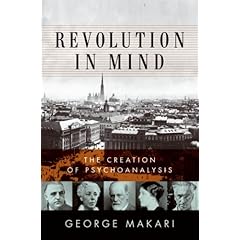
In a recent Sunday Book Review in the New York Times,George Prochnik reviewed George Makari's Revolution In Mind: The Creation of Psychoanalysis. According to Prochnik (I have to rely on him as I have yet to read this, but it is now on the list), there is discussion about Freud's background in hypnosis. Apparently one of Freud's mentors, Jean-Martin Charcot who apparently believed that the affects of hypnosis "depended upon the abnormal nervous condition of the hypnotized." Apparently, though, Charcot was diagnosed by Hippolyte Bernheim as having moments of hysteria, too. Bernheim's theory of hypnosis was that hypnosis worked with "exaggerated human credulity" or the idea of suggestibility rather than genetic hysteria. It was with this idea that Freud became the man we all know and love - the psycho analytic theorist. He utilized Bernheims ideas about hypnosis, but changed it a bit with the idea that the mind is more susceptible to suggestions made within rather than form outside sources.

There is a lot more to Procnik's review, so do check it out, but it is always interesting to see anything about those who helped make hypnosis the tool it is now.


Tuesday, January 8, 2008

A Man Named Freud; A Man Named Erickson


Once upon a time there was a man name Sigmund Freud who became a legend in the psychiatric field. This particular man decided to use hypnosis in his practice. Through the use of authoritative hypnosis techniques, he had his clients access the unconscious to help with various mental afflictions. However, he had a few issues with this. He believed that the unconscious mind was a collection of the unseemly aspects of the human mind. It is also rumored that he did not like this process and wandered away from it because many of the clients felt like they had fixed themselves, rather than with heralding Freud with the success. (1)

Though if Freud were reading this, I suspect he might balk at it and reprimand me in that famous German accent we all love to imitate. It may be further noted that he was opposed to Bernheim's hypnotic suggestions (direct, authoritative suggestion for symptom removal), but he himself was known to be intense and leading in an authoritative manner. (2) This would either cause the client to never return or "remember" traumas that caused their hysteria (often sexual abuse). We could talk about false memories here, which has been a problem in the history of regression hypnosis, and more about Freud's hypnotic processes but that would cause us to digress, so we shall save it for another post.

So then, where is leading, Ms. Blunt, you might ask? This segways from authoritative techniques to the need for more permissive ones, where the client is not forced to create memories and feels more secure in the therapist's hands or rather - words.


Enter Milton Erickson, the more modern hero for the present hypnotist. Feeling a bit of an opposite, he believed it was just fine for the client to feel they had fixed themselves. One might say, he had his ego a little more together than Freud (ouch, I feel the harsh slap across the dimensions of time and space). Sorry. Erickson also found success in using the client's own belief system and terminology to induce a trance. The idea of being kinder and more supportive of the client was felt in his hypnotic work. And one of his biggest concepts brought out the use of the metaphors as a handy tool. But again I digress. We will come to that later.

Let's go back a few sentences to "Feeling a bit of an opposite, he believed it was just fine for the client to feel they had fixed themselves." Erickson was the one who believed that unconscious mind was full of solutions and possibilities and that a person could find their own inner answers to their ailments. By being polite and allowing clients to feeling in control during hypnosis, they would relax more easily and be more open. (1)

So hence, we have permissive hypnosis.


Sources:

  1. Headcleaners.com
  2. Freud and hypnosis: The hypno-suggestive roots of the Oedipus complex
  3. Getting Past that Old-Style Hypnosis